How to pop up faster
The most difficult manoeuvre in surfing is the pop-up. Going from a prone position to a standing position is so difficult that most people don’t even start surfing. The pop-up is also something that, once you can do it, becomes automatic, but later in life you have to work again to maintain an explosive and fluid pop-up.
The pop-up is the start of every wave you will ever ride, so as a coach, I can only advise you to make sure your pop-up stays on point.
If we also look at where we are doing our pop-up, it makes sense that you have to pop up fast and explosively. At the exact moment when we pop up, the wave is steep and there is not much time. Everything has to happen fast and with the right technique.
In this blog, I will teach you how you can make your own pop-up faster so that you can stop missing waves.
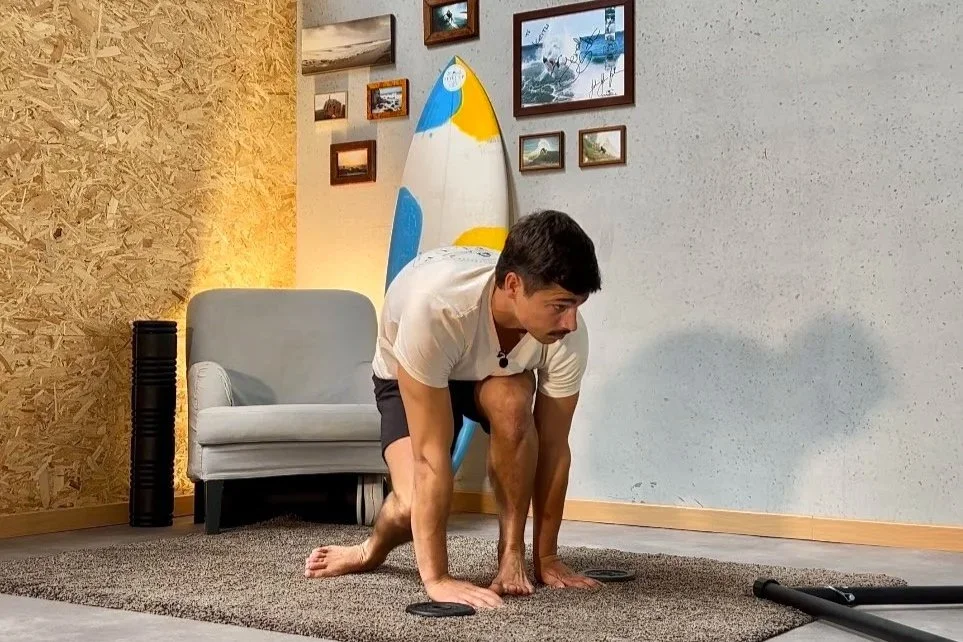
Explosive strength
A pop-up has to be done fast, and to do a pop-up fast, we simply need to be explosive as athletes. Explosive strength training is therefore a great form of land-based training that can make your pop-up faster than ever before even without surfing.
Typically, within 8 weeks of training, you will start to see your pop-up speed improve. Explosive strength training teaches you to move fast instead of training like a bodybuilder to simply pump up your muscles.
Next time you decide to do a workout, think about adding some explosive exercises into the mix.
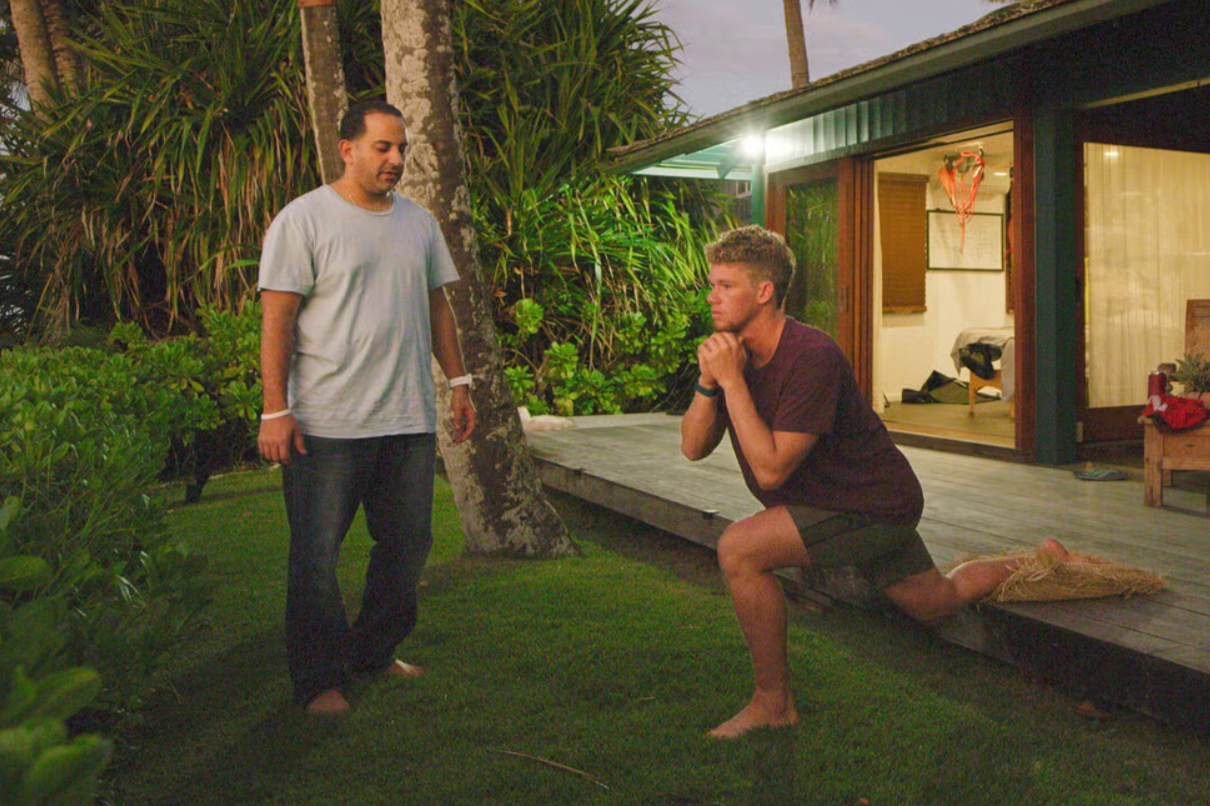
Mobility
If we analyse the biomechanics of the pop-up, we can see that different types of mobility are required to perform it efficiently. When you are stiff, the pop-up instantly becomes harder to perform.
We can try to force ourselves up or find different ways to stand up, but if the required mobility isn't there, your pop-up will be slower, harder, or sometimes even impossible to perform.
Making sure you build the right mobility for doing the pop-up and surfing in general is absolutely key. When your back, shoulder, and hip mobility improves, your pop-up will become faster.
Just like with explosive strength, you want to add mobility exercises to your land-based workouts. If you want a program that you can start today and that covers both explosive strength and mobility to improve your pop-up, become a member and join the Level Up Training Program.
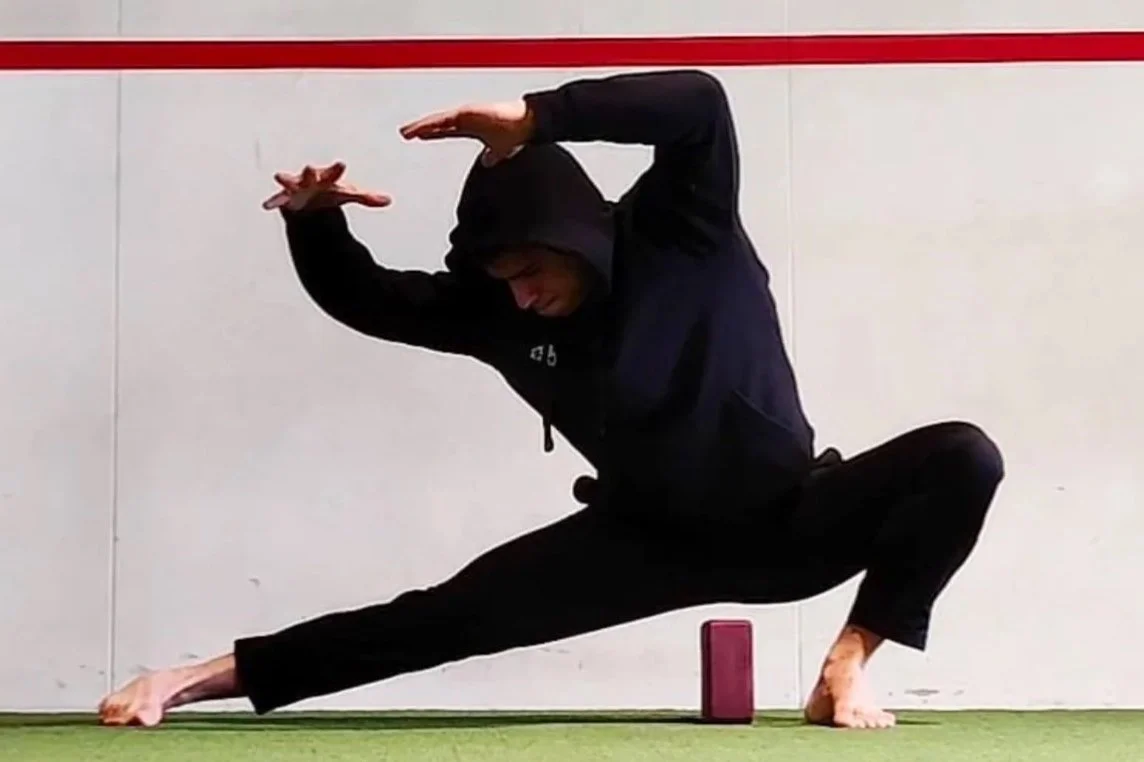
Relative Strength
Strength-to-bodyweight ratio, or relative strength, is one of the ways we can measure how athletic someone is for surfing.
To explain what relative strength is, I want you to imagine a surfer who weighs 90 kg and a surfer who weighs 50 kg. Both surfers have an athletic build. Now imagine that the two surfers have to do a weightlifting contest.
The bigger surfer can lift 100 kg, while the lighter surfer can only lift 80 kg. The bigger surfer lifted the most amount of weight, so in terms of absolute strength, the bigger surfer is the strongest of the two.
But in surfing, we don't throw around big weights. We have to move and control our own bodyweight, which means relative strength is much more important.
We measure relative strength, or strength-to-bodyweight ratio, by dividing the weight lifted by someone's bodyweight.
For the bigger surfer:
100 kg ÷ 90 kg bodyweight = 1.11
For the smaller surfer:
80 kg ÷ 50 kg bodyweight = 1.6
The smaller surfer has a strength-to-bodyweight ratio of 1.6 for this lift, while the larger surfer has a ratio of 1.11. This means that the smaller surfer is actually stronger relative to their bodyweight, even though they lifted less total weight.
You can have all the muscles in the world, but if those muscles aren't producing enough force compared to your weight, that extra muscle mass is also extra weight that you have to carry with you.
Being strong for surfing is great, but make sure you don't only become heavier through muscle mass. You also want to become stronger relative to your bodyweight.
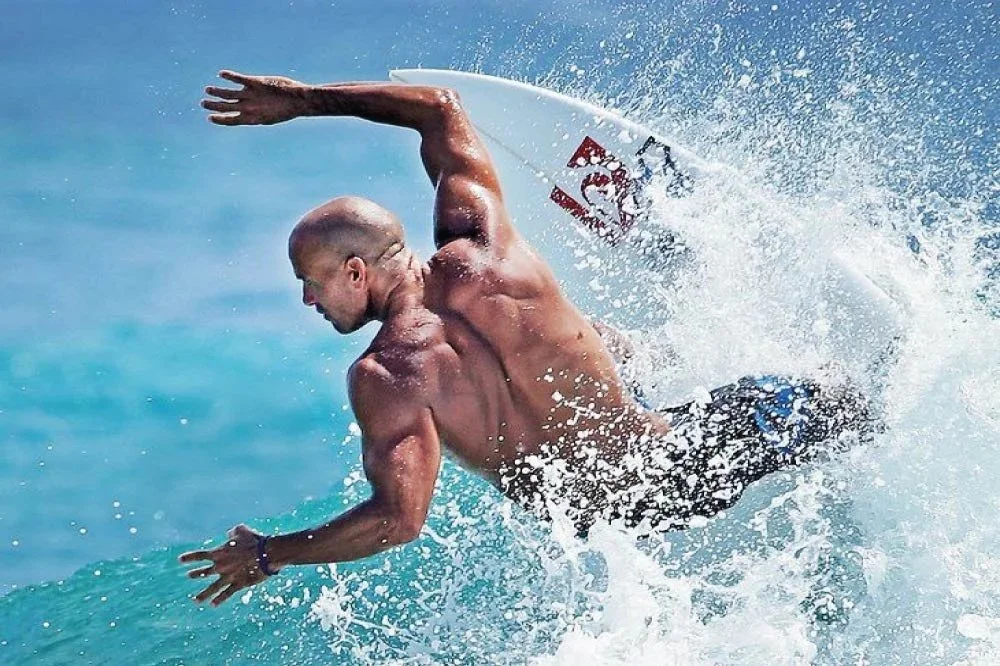
Positioning of the board
Just like every surf coach, I started coaching beginners at surf camps. One of the main issues that makes beginners fail their pop-up is their inability to stabilise the board during the pop-up.
If you think about it, you are lying down on your board quite stable. From the moment you press your hands down, you lift your chest off the board, which instantly makes you more unstable. The moment your legs start moving forward, your centre of mass starts shifting again, and that’s where most beginners start to fall.
Too often, coaches and students forget about this whole process of the centre of mass shifting during the pop-up. All you hear about is “stand up fast” or “stand up now”, but nobody talks about staying stable or finding stability throughout the process of standing up.
The positioning of the board is an important factor, and I want you to start thinking about the position of your board as the foundation of your house. At any given time, try to maintain a stable foundation.
Just by thinking about keeping your board stable, you will see that your body starts organising itself differently and in a way that is more suitable for standing up.
Another cue could be to imagine that there is a glass of wine standing on the deck of your surfboard, right in front of your head. Try standing up without shaking the board and without spilling the glass of wine. You will see that instantly, your pop-up will become more stable and therefore more successful.

Paddle technique
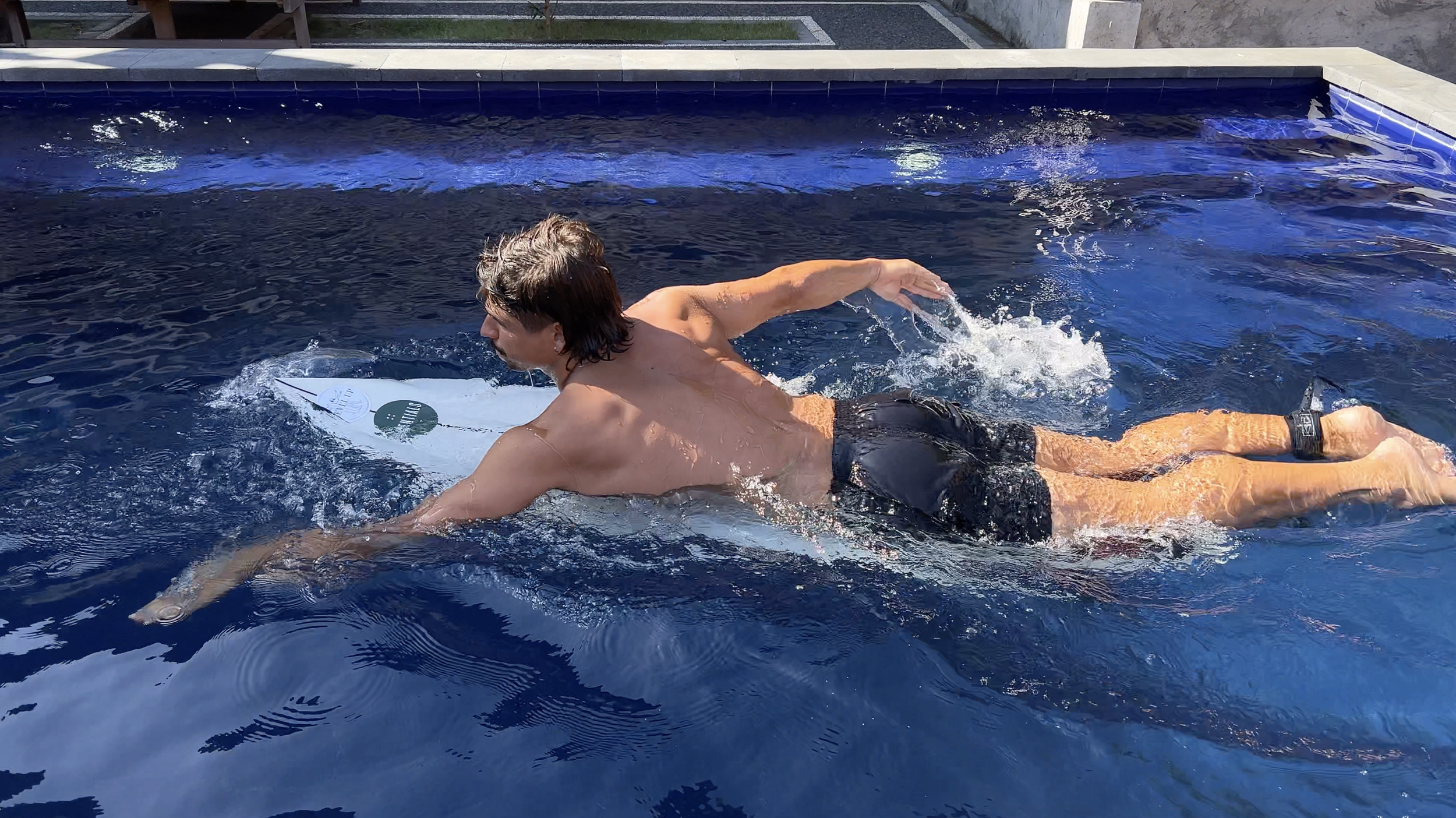
Another thing that many people don’t think about is the importance of speed when it comes to stabilising the board. When a surfboard is moving forward slowly, the board is less stable than when it is moving at a higher speed. When a board moves quickly through the water, the water around and underneath the board starts to stabilise it, and the movements you make also have less effect on the surfboard.
Now, taking this into account, I want you to think about your paddling. If you paddle fast and manage to stand up while the board has speed, your pop-up instantly becomes easier because your board is simply more stable.
So often, I see people paddling slowly without any real intention. It is no surprise that slow paddlers also have a harder time performing the pop-up.
Every time you paddle for a wave, try to paddle fast so that your board becomes more stable once you stop paddling to perform your pop-up.
Practice on land and in the water (also in “bad conditions”)
Practising the pop-up on land can definitely help you develop some of the explosiveness and mobility required to perform the pop-up in the surf. Beginner surfers often practise at home, and people who don’t surf on a regular basis do this as well. It is always good to exercise to maintain your explosiveness and mobility when you can’t surf that often.
What is important is that eventually you also practise in the surf to really develop the correct technique. That’s why, if your pop-up is still difficult for you, you should always go out and surf, even when the conditions are not perfect. There are no bad waves only bad surfers.
To practise your pop-up, all you need is a closeout. Get out there and practise your pop-up in all conditions so you get in your reps.
Next time you do your pop-up, think about this blog. Best of luck, and enjoy surfing!