How to surf small waves better
Difficulty in surfing is often measured by the size of the waves, especially by people who don't surf and many beginner surfers. The idea that smaller waves are easier to surf than bigger waves with more energy is actually a misconception.
The smaller the wave, the less energy it has, making it harder to ride the entire length of the wave without losing speed. Because the wave is smaller, the area with enough energy to push you forward also becomes smaller, meaning you literally have less room for mistakes. One small timing error or technical mistake and you lose all your speed.
On larger waves, this is generally not the case. Of course, when we are talking about really large waves, surfing becomes much more difficult again, but in general, we can say that surfing small waves is actually more challenging.
You are definitely not the only one who struggles to surf smaller waves. In this blog, I will teach you how to improve your small wave surfing once and for all by changing four things in the way you approach small wave surfing.
Volume
If you want to instantly improve your small wave surfing, you need more volume underneath your chest. Paddling immediately becomes much easier with more volume, meaning your wave count will instantly increase. Once you stand up, you will notice that you carry much more speed, and when you make a small mistake, the board will maintain its speed better, allowing you to continue your ride.
More volume does, however, mean less responsiveness, so it is important to find your sweet spot.
For beginner surfers, I recommend choosing a long and wide board made in a soft-top material. Boards like these provide all the stability you need to surf the whitewater and ride straight towards the beach.
Intermediate surfers are better off with something a little narrower but still long enough to paddle comfortably. Mid-length surfboards are the ideal in-between option. They provide plenty of paddling support, but because they are usually narrower and lighter than beginner boards, they are also more responsive. This is exactly what you want as an intermediate surfer who is starting to learn how to do turns.
If stability is still an issue for you as an intermediate surfer, a Mini Malibu is another great option. These boards are typically wider than a mid-length, giving you more stability while still being much more responsive than a soft-top.
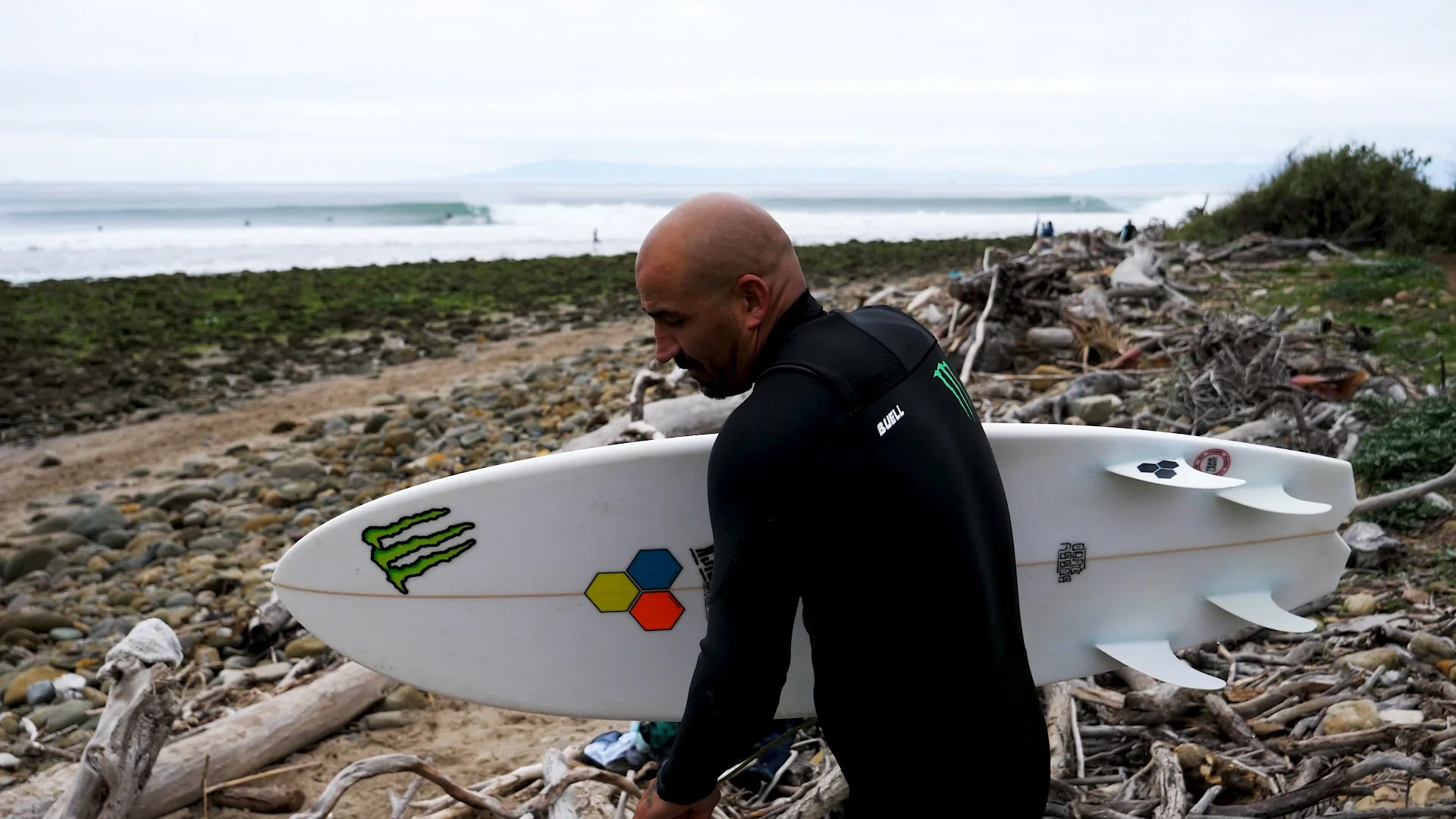
For advanced surfers who want to get the most out of small waves, a Groveller is the go-to choice. A Groveller is typically 4 to 6 inches shorter than your standard shortboard, while being noticeably wider and having less rocker. I personally always surf a Groveller back home in Belgium, and it is excellent for carrying speed through flat sections and maintaining momentum in low-energy waves.
For intermediate and advanced surfers, a longboard is also a great option for smaller waves if longboard surfing is your preferred style of surfing. I do not recommend longboards to beginners because they are not made from soft-top material.
The next time you go surfing in smaller waves, consider taking a board with more volume. Your performance will improve, and you'll have a lot more fun in the water.
2. Paddling
Most of the time when I coach someone for the first time in smaller waves, they don’t paddle with the right intention. Small waves don’t have a lot of energy, which means the chances of getting pushed forward are lower simply because the wave has less speed and power.
I will now give you the paddle tips that will give you the highest chance of catching waves when the surf is small.
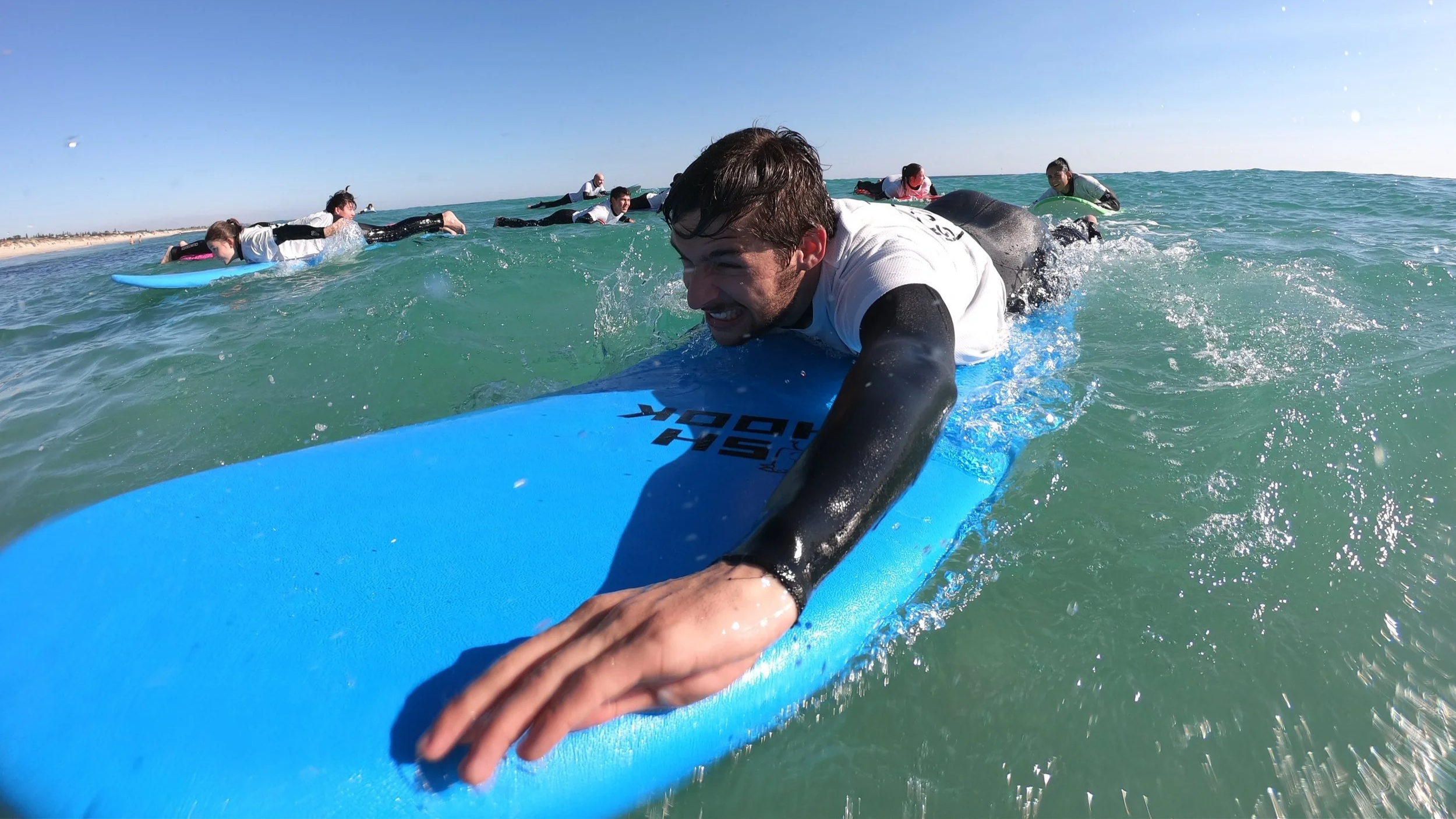
The first thing you have to do is perform deep paddle strokes. Too often, I see surfers paddling superficially. They are literally just petting the surface of the water. Don’t do that. Paddle with your entire arm and use your arm (paddle) to it’s full potential.
Next up is paddle frequency. When you paddle for a slow wave, you want to increase your paddle frequency so that you can create enough speed. If you manage to catch the wave using high-frequency, deep paddle strokes, you already have speed from the beginning. This will make your take-off easier and allow you to start the wave with momentum instead of having to build speed from zero.
The final thing you should do while paddling faster with deep paddle strokes is pressing your chest, and eventually your chin, down towards the board. You do this while accelerating. Don’t just drop your chest and chin suddenly. Instead, gradually lower your body position as you accelerate while paddling for the wave.
This forward pressure and momentum that you create by changing your posture while paddling will help you catch waves more easily.
Your paddling is what allows you to catch waves, so as a coach, I can only advise you to make sure your paddling technique is absolutely on point.
If you would like to learn more about paddling technique, board handling, and how to paddle efficiently, check out The Surf Technique Blueprint.
Remember: paddle with deep paddle strokes, increase your paddle frequency, and press your chin down.
3. Stay close to the green zone
On smaller waves, the green zone, as I like to call it, is significantly smaller than on larger waves. The green zone is the area on the wave where you can maintain your speed without having to generate extra speed yourself.
If you stay inside the green zone, you can surf a wave from start to finish. However, because the green zone is much smaller on smaller waves, riding the entire length of the wave becomes much more challenging.
When you surf smaller waves, try to do things that always bring you back into that green zone. Depending on your surfing style and skill level, there are different ways to stay there.
If you are able to perform manoeuvres, you can surf tight in the pocket by performing snaps or cutbacks. If you are not at a high enough level yet, focus only on performing cutbacks. If you cannot do a cutback yet, you can simply stall by leaning back on your board.
By stalling, you slow yourself down and reposition yourself back into the green zone of the wave. Once you are back in the green zone, stop stalling and continue surfing with speed. When you lose speed again, stall again to bring yourself back in the green zone.
Being a good surfer is often described by people as being able to perform spectacular manoeuvres, but I see this differently. Being a good surfer can have many different forms.
Being able to read the wave and reposition yourself inside the green zone as the wave changes shape and speed is, in my eyes, also a form of advanced surfing, even if there are no spectacular manoeuvres performed on that wave.
Stay close to the green zone when surfing small waves if you want to ride the wave for as long as possible.
4. Use your legs
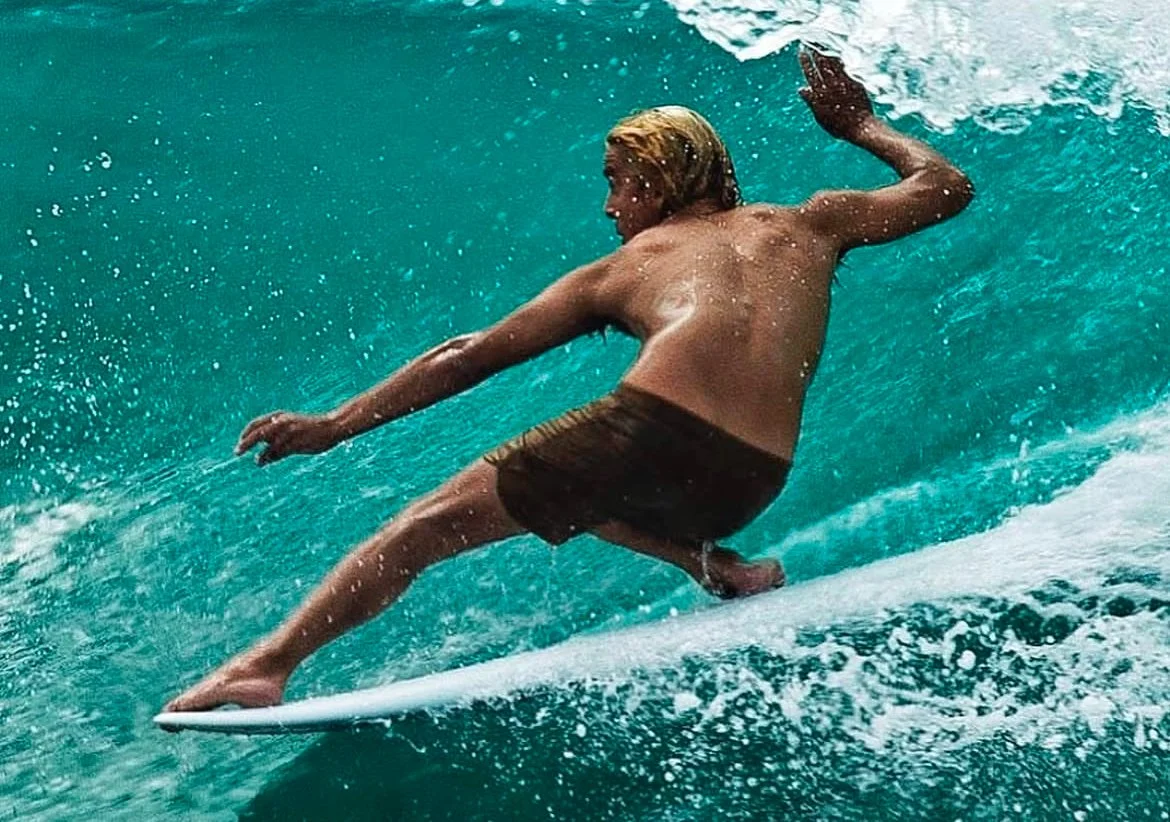
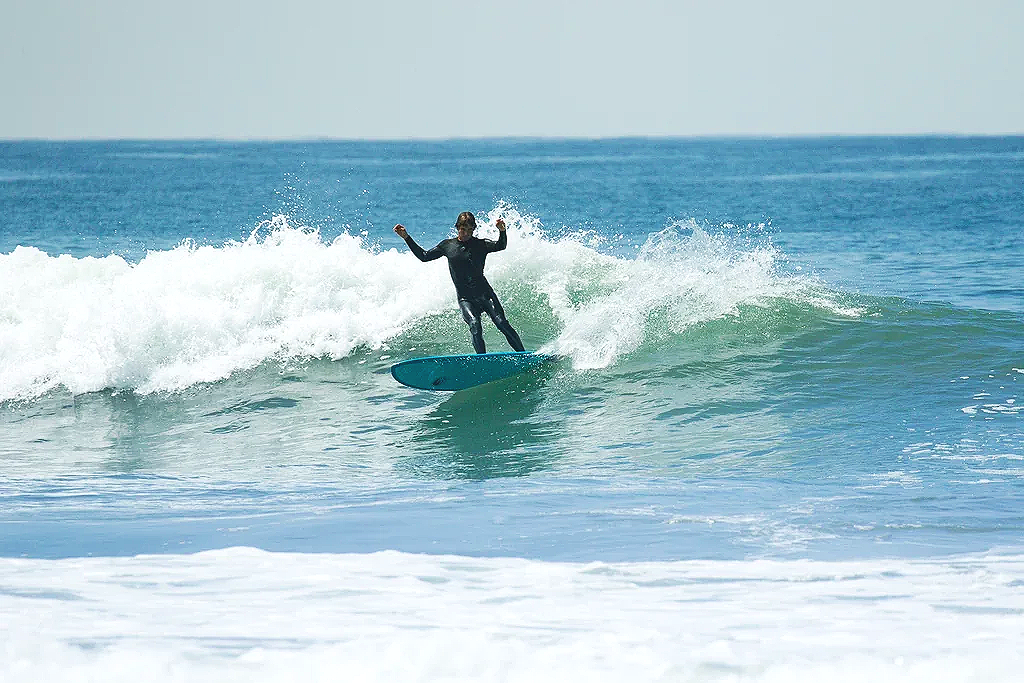
Your legs are your extra power source when riding small waves. When a wave becomes flat and there is no longer enough energy to push you forward, your legs are what can create that extra speed.
By putting pressure into your surfboard (what we call compression), you can then release that pressure (what we call extension) to project your board out of the water and in the direction you want to go.
Explaining exactly how to redirect your board is not possible in a blog post, so if you would like to learn more about this, I recommend checking out The Surf Technique Blueprint wherein I explain all surfing techniques in video format.
In general, surfers are often too extended. As coaches, we are constantly telling surfers to stand lower and create more compression because it is a power source that many surfers are not using. If you are standing tall and extended all the time, you are missing out on the ability to generate speed with your legs.
Remember, if you want to surf better and create more speed in smaller waves, you need to start using your legs.
These were the four things I would like you to change in the way you approach surfing smaller waves. I hope this was helpful, and thank you for reading.