How to train like a surfer
More than half of your surf sessions are spent paddling alone. A majority of the remaining time is spent sitting or lying in a prone position on your board, waiting for waves. Another significant portion of your sessions is spent recovering after wipeouts. The hard reality is that only a small percentage of all the surf sessions you will ever do is actually spent riding waves.
I know this probably isn't the most exciting thing you want to read, but it is the hard truth. Surfing is hard, and it is extremely fatiguing. We cover a lot of distance during surf sessions with paddling, and when we are riding waves, our bodies bend and twist into all sorts of odd positions that we simply don't move through on land.
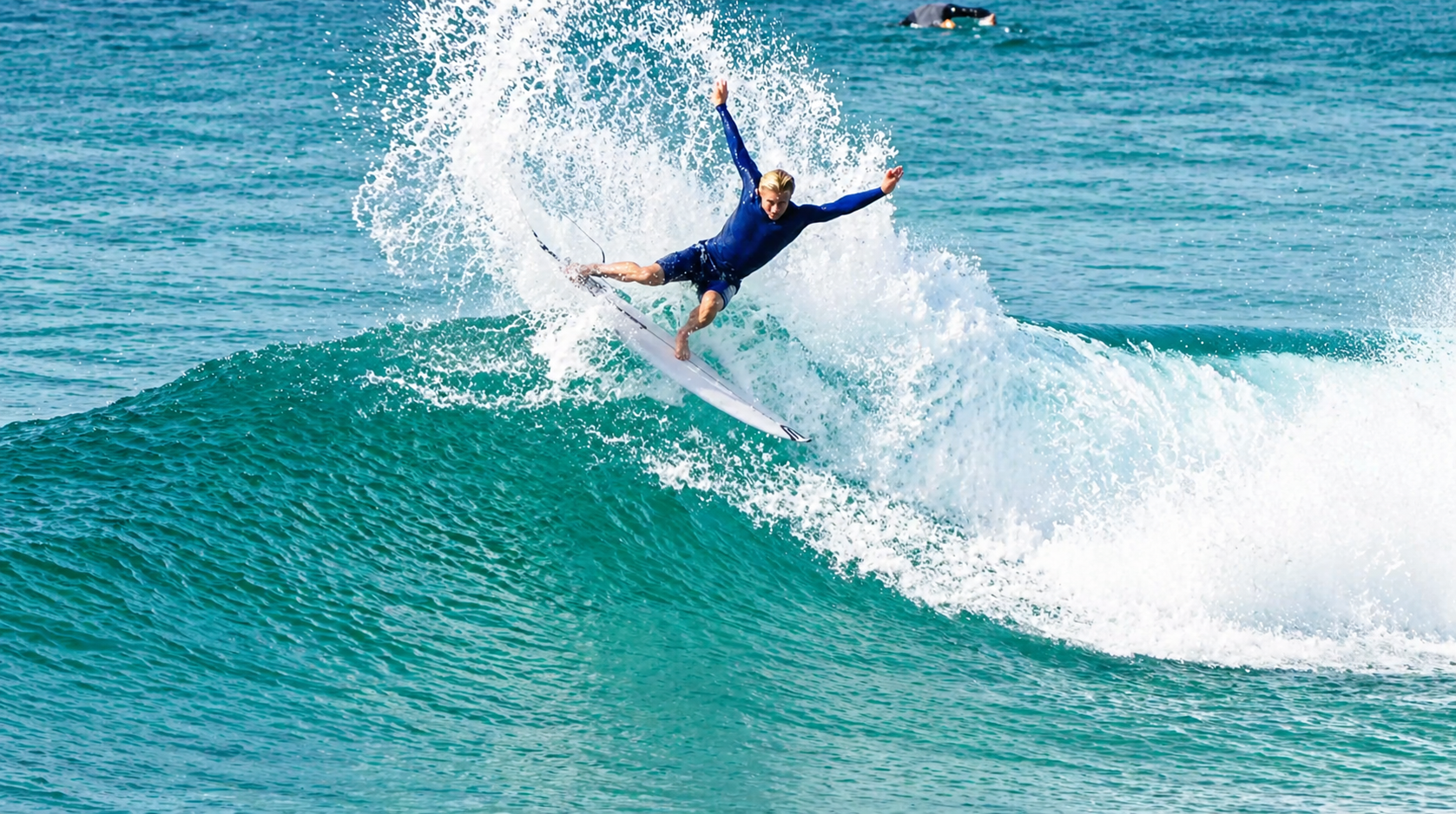
These often fast and explosive movements put a tremendous amount of strain on our bodies, which most surfers aren't aware of. That is where Level Up Surf Coaching comes in. I want to spread the message of "train on land, perform on water" and help surfers improve their physical preparation through structured surf training programs.
In this blog, you will learn about the main types of training surfers should be doing to optimize their performance in the water and reduce the risk of surf-related injuries.
I like to use the analogy of looking at your body as a house. Just like a house, we want a body that is strong and robust. The first physical quality that forms part of your house's framework is its foundation, which in this case consists of strength.
As surfers, we don't need to be bodybuilders, but we still need strength to paddle, duck dive, pop up, generate speed, perform surfing manoeuvres and handle wipeouts through effective warding patterns. When you compare the surfing of a child to that of an adult, apart from the morphological differences, one of the biggest differences is simply strength. More relative strength means faster paddling, catching more waves, deeper duck dives, and potentially more powerful surfing.
Again, you don't need to be a bodybuilder, but you do want to be strong as a surfer. One of the best ways to help surfers become stronger is through full-body surf specific strength training sessions. Depending on how many times you surf per week, you can train full body anywhere from one to three times per week.
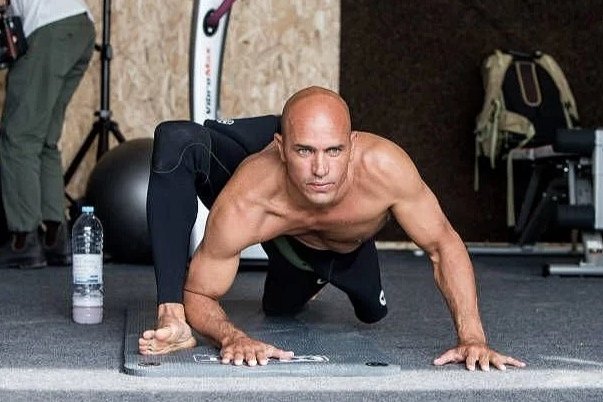
With full-body strength training, you target every major muscle group during a single session. This type of training is both time-efficient and highly effective within a surfer's schedule. If you surf on average once or twice per week, then adding one or two strength sessions on top of your surfing is very manageable.
Now, why is this type of surf strength training better than others for surfers?
Imagine training like a bodybuilder using a traditional bro split, where you isolate every body part. You would need to train much more frequently just to target every muscle group once per week: Monday chest, Tuesday back, Wednesday shoulders, Thursday arms, and Friday legs.
That is simply too much strength training if your goal is also to surf throughout the week. Your body cannot recover properly from all that training and surfing, and eventually you become tired and weaker instead of stronger.
A typical strength training session in the Level Up Surf Training Program lasts around 45 to 60 minutes and includes a dynamic warm-up to increase body temperature, activate the body, and improve range of motion, as well as a cool-down to bring the body into a parasympathetic state to initiate recovery.
The core of each session consists of a mix of bodyweight and weighted exercises. We often work with supersets where, for example, we first perform an upper-body pulling exercise immediately followed by a lower-body exercise before resting.
Supersets are a great way to make training more time-efficient. An additional benefit is that they also improve cardiovascular fitness which helps us with our paddling.
The second non-negotiable type of training every surfer should be doing is mobility training, also known as dynamic active flexibility training.
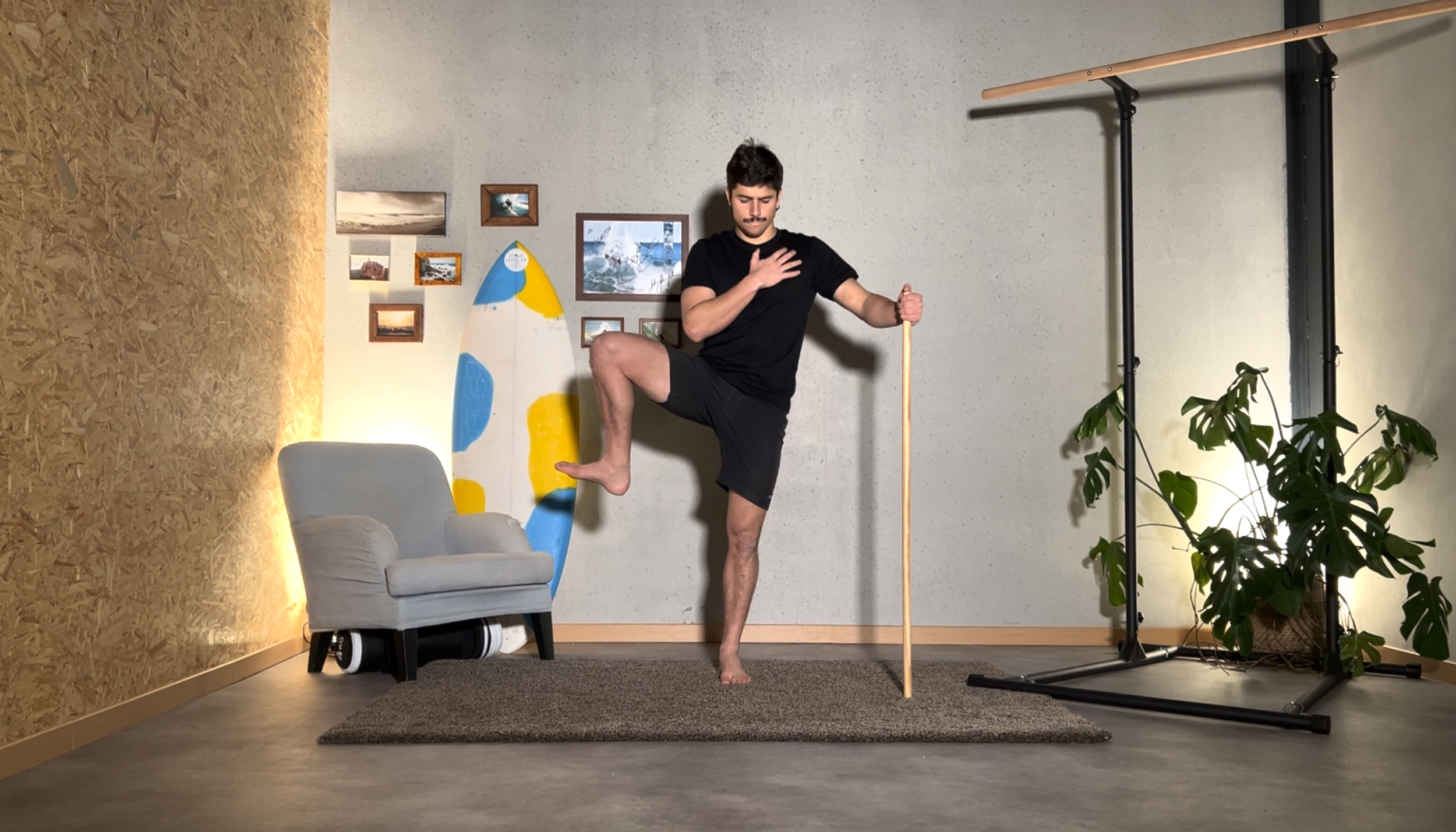
An important thing to understand is that there are four different types of flexibility: dynamic active, dynamic passive, static active, and static passive flexibility. All four are important for surfers if we want to reach our optimal dynamic active range of motion for surfing.
Flexibility training is just like any other physical quality you want to improve. If you want to become more flexible, you need to invest time and effort into it.
Many people treat flexibility work as a quick 5- to 10-minute warm-up or cooldown, but that is part of the problem. Besides not knowing how to stretch specifically for surfing, many people simply don't spend enough time working on their mobility.
If you want to make mobility or flexibility gains, start prioritising your flexibility training. If you have been stiff your whole life, it is common sense that you will need more than 5 to 10 minutes during a warm-up to actually become more flexible.
And before you say, "I am super stiff, I can never become flexible," take my word for it that I have taken the most stiff people you can imagine to very flexible throughout the years of working as a personal trainer. The ‘oldest’ person I made flexible is a 63-year-old lady who managed to get her hands flat on the ground in a standing pike position with locked knees after following a flexibility program with me.
It is never too late to become flexible. All you need to do is start training your mobility consistently.
The third important type of training is what I like to call "surf survival training."
This is not, as you might think, training inside a pool. It is an extremely demanding form of interval training that I created for the Level Up Surf Training Program.
The idea behind this type of training, and why it works so well for surfers, is simple.
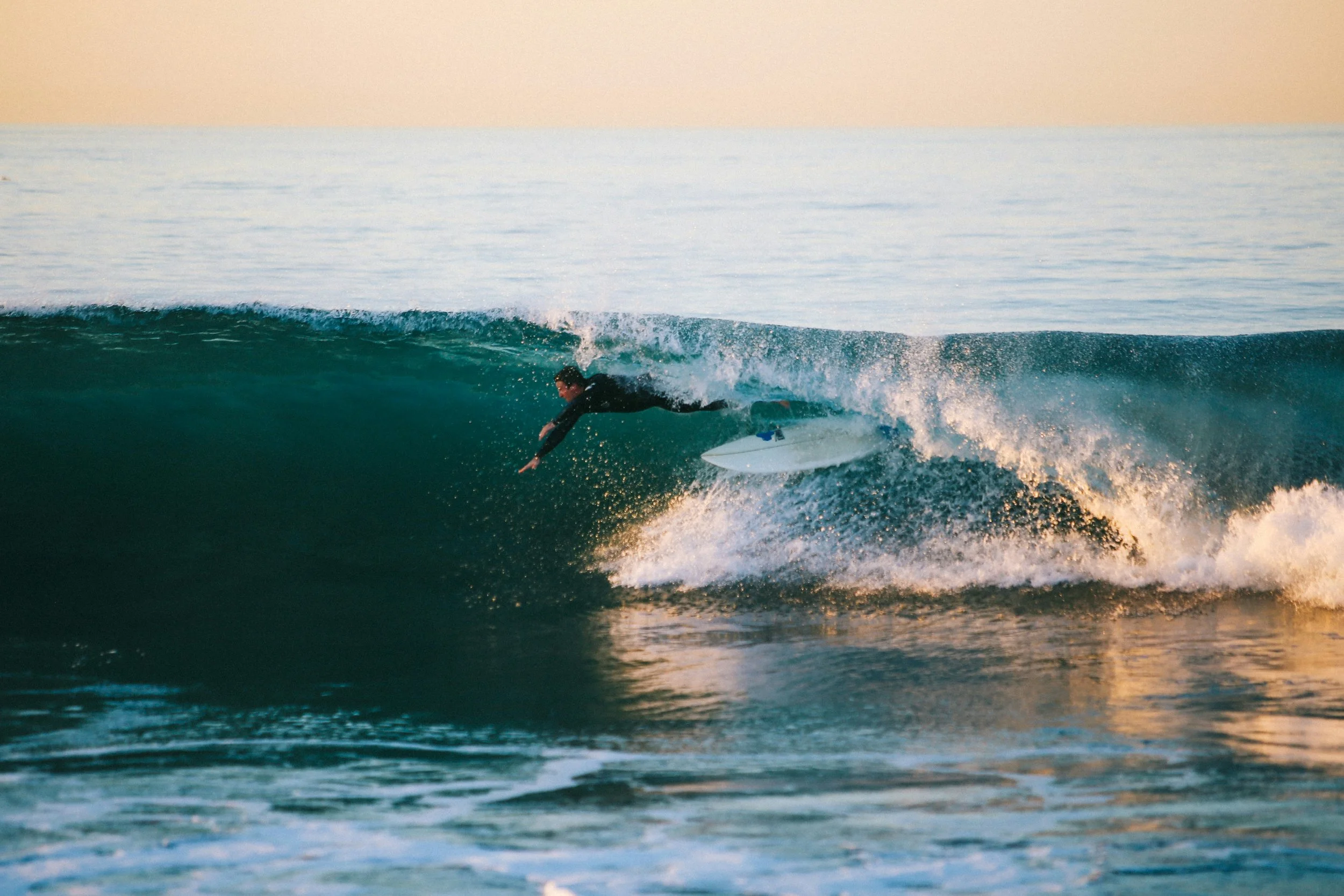
Imagine you find yourself in a gnarly situation while surfing. You wipe out and get held down for a long time. When you finally come up for air, another set wave lands on your head, followed by another, and another.
These type of situations happen to all of us from time to time. You get completely gassed out, and when the surf is bigger or the water is cold, things can become intimidating very quickly.
Surf survival training mimics this feeling.
You perform an intensive exercise on land for 30 seconds until you are completely exhausted. You then rest for only 10 seconds before moving on to the next 30-second effort. In total, you complete eight exercises before taking a longer break.
The exercise itself represents your body consuming oxygen and becoming fatigued. The 10-second rest period represents the brief moment between waves when you have a chance to breathe. The next exercise arrives before you have fully recovered, just like the next wave in a relentless set.
There is no escape and very little time to rest.
Many of the surfers I train are unable to complete the advanced circuit the first time they try it. Even a single round can be incredibly intense.
This type of training is often combined with explosive exercises, making it highly effective for developing both explosive power and a cardiovascular system that can handle almost anything the ocean throws at you.
The fourth type of training we focus on as surfers is paddle posture and core training.
As mentioned earlier, a huge part of every surf session is spent paddling. If we look at the position we hold while paddling, we are lying prone with the spine in a hyperextended position.

The last time most of us spent significant time in that position was when we were babies before we learned how to walk.
It is an uncommon position, and it requires a fair amount of mobility, particularly extension through the thoracic spine.
Your erector spinae muscles, which run from the base of your skull all the way down alongside your spine to your lower back, need to work for prolonged periods while paddling. This means endurance and stability play a key role in maintaining good paddle posture.
If we analyse the biomechanics of surfing, we also see that almost every movement we perform is asymmetrical. Because of this asymmetrical nature, it is very easy to develop imbalances within the body.
Think about differences in mobility, muscle tone, strength, and muscular development between one side and the other.
Through paddle posture and core training, we can address and reduce some of these imbalances.
Nobody is perfectly balanced, and striving for a perfectly balanced body is not something I promote. It is a never-ending pursuit that takes attention away from more important forms of training that provide greater benefits.
That said, paddle posture and core training remain an important part of the Level Up Surf Training Program because your core is the centre of your body. It connects your upper body to your lower body and allows force to be transferred efficiently between the two.
A good rule of thumb is to dedicate some time to core training but only increase the volume if your performance requires it or if you are dealing with injuries related to a weak core.
If you do not have performance limitations or injuries caused by insufficient core strength, there is no need to dedicate a large portion of your training time to it.
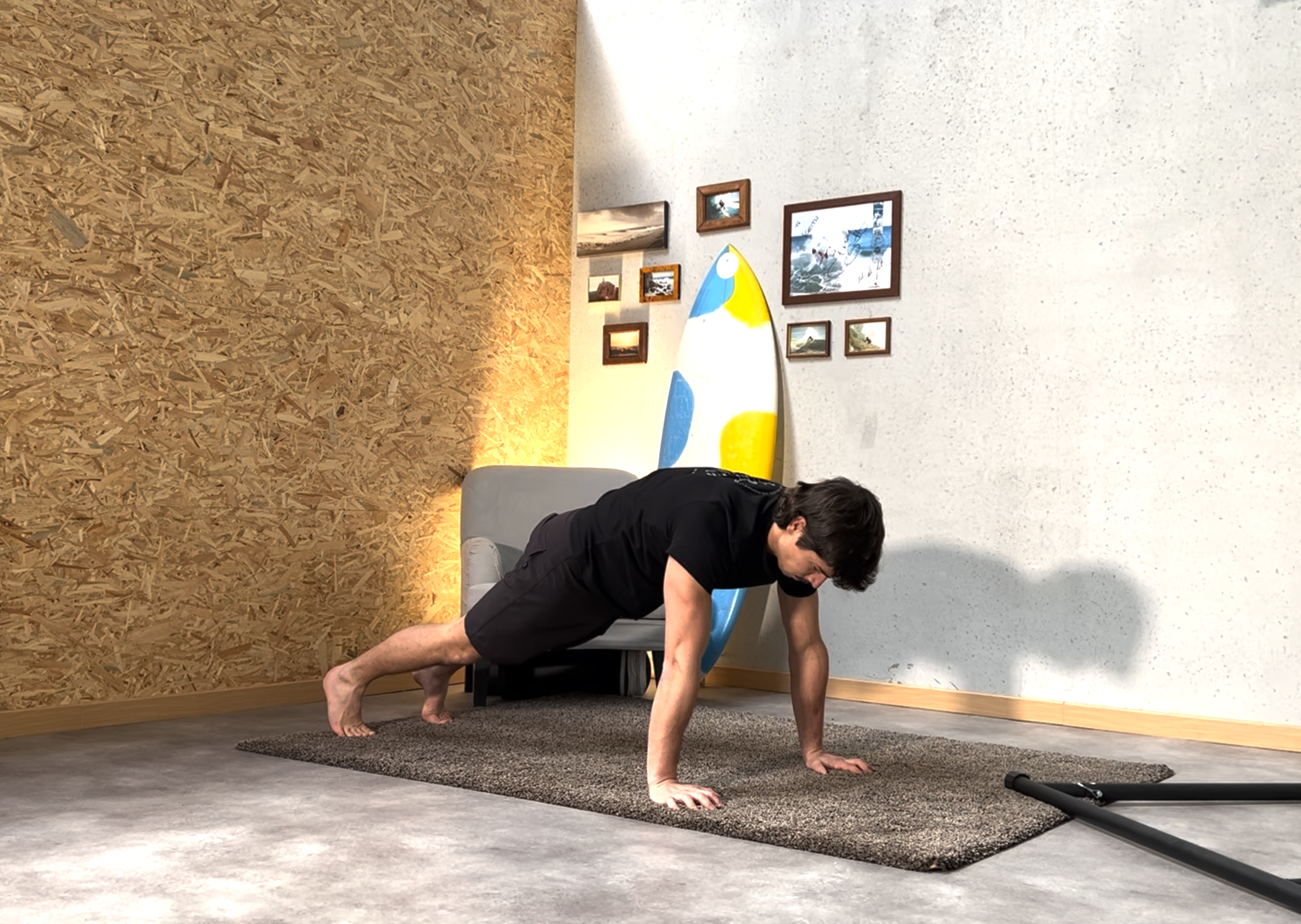
And finally, the last types of training are actually part of the mobility and flexibility training family: your morning and evening routines.
Yes, as a surfer and as a human being in general, you should dedicate some time each morning and evening to taking care of your body.
In the morning, I like to program dynamic mobility routines for both the surfers I coach and for myself. These routines consist of a combination of dynamic active stretches that focus on what I call the three big rocks: your spine, your shoulders, and your hips.
During these morning routines, we gently improve mobility in all three areas and move through every possible plane of motion. At the same time, we activate the muscles, slightly raise our heart rate, and increase body temperature.
After a night of sleep, this is the type of routine that prepares your body for the day ahead.
In the evening, we shift our focus towards more static and passive stretching. This style of training is more parasympathetic in nature, helping the nervous system relax and downregulate at the end of the day.
Everyone who trains with Level Up is encouraged to complete both a morning and an evening routine (after surf stretching), even on days when they have not surfed.
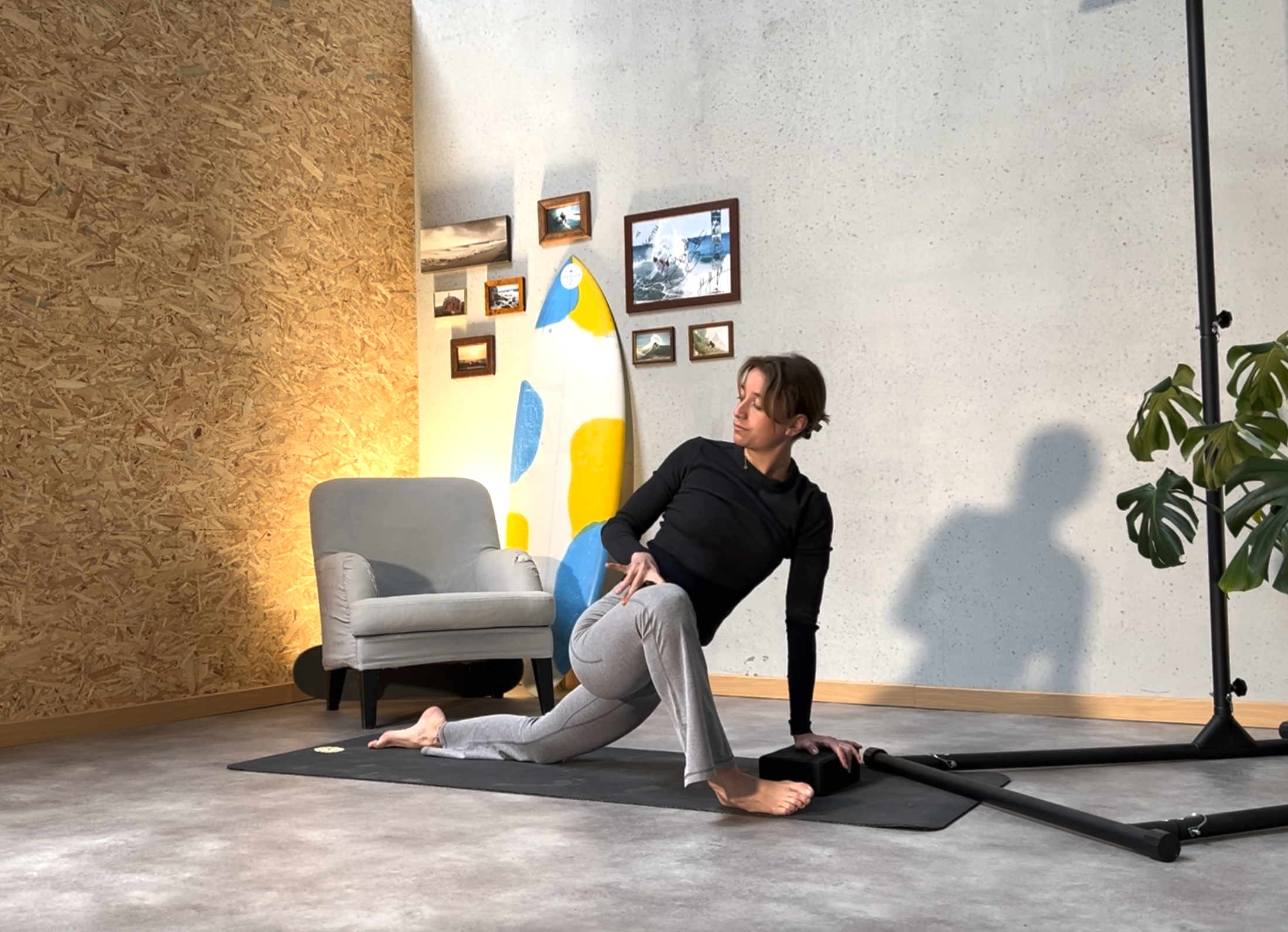
You can genuinely feel the difference when you consistently perform your morning and evening mobility work.
The effects become even more noticeable on surf trips. These routines help you recover from the physical demands of consecutive surf sessions and often make the difference between feeling beaten up halfway through a trip or still surfing well by the final day.
They allow you to maintain your mobility, reduce stiffness, and continue performing at a high level from day one until the very end of your trip.
These are the main types of training surfers should be doing to reduce the risk of injury and get the most out of their time in the water.
Surfing is one of the most physically demanding sports in the world. Make it easier on yourself by ensuring that physical limitations do not hold you back when you're out there.
Whether your goal is to paddle stronger, move better, surf more powerfully, or simply stay injury-free, investing time in your training on land will pay off in the water.
If you need help with your training or feel ready to start training specifically for surfing, take a look at my Surf Training page for all the available surf training options.
Thanks for reading.
See you in the lineup!